Multiple Choice Reflection 2020
Multiple Choice Completion(66/67)


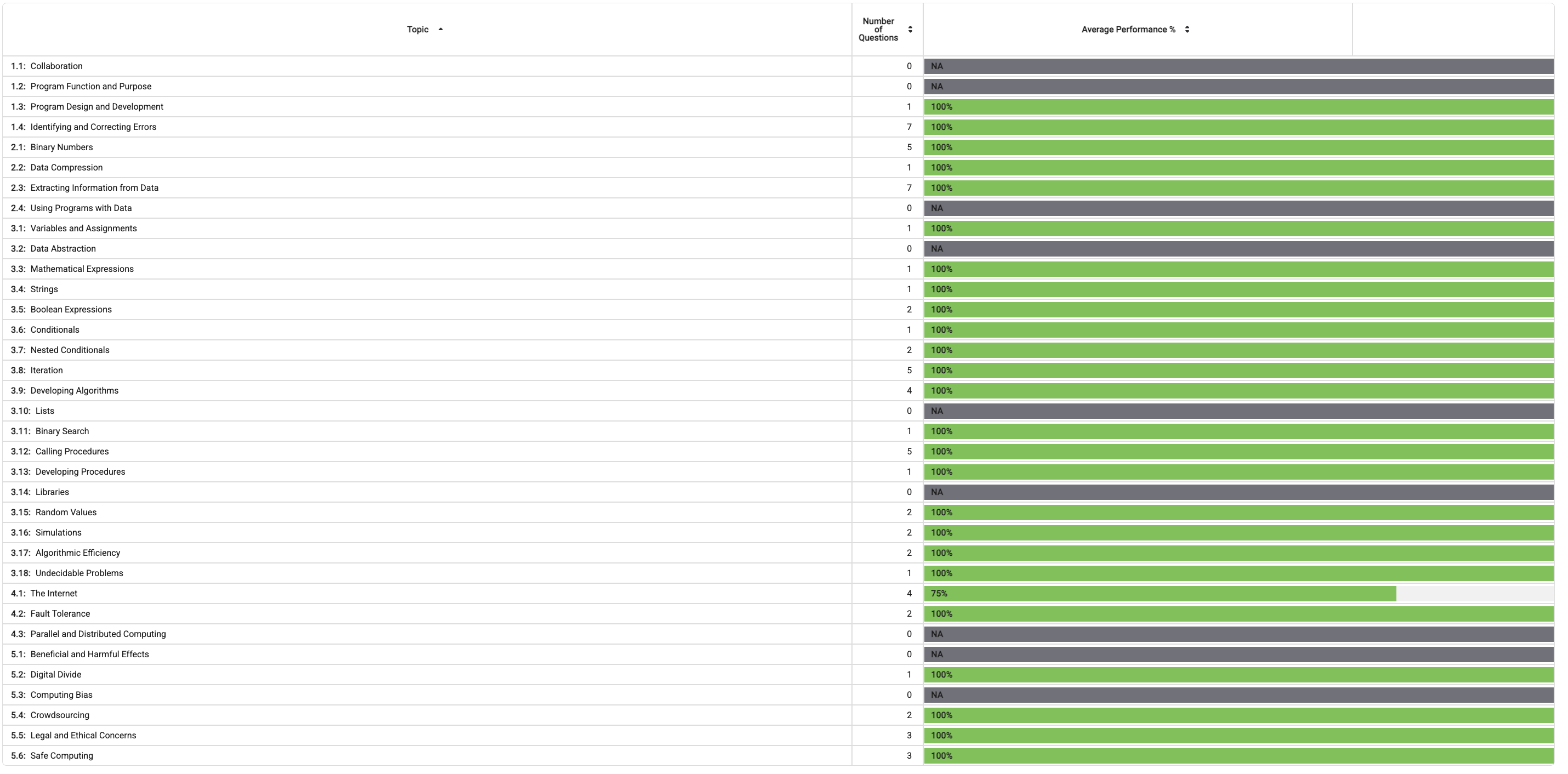
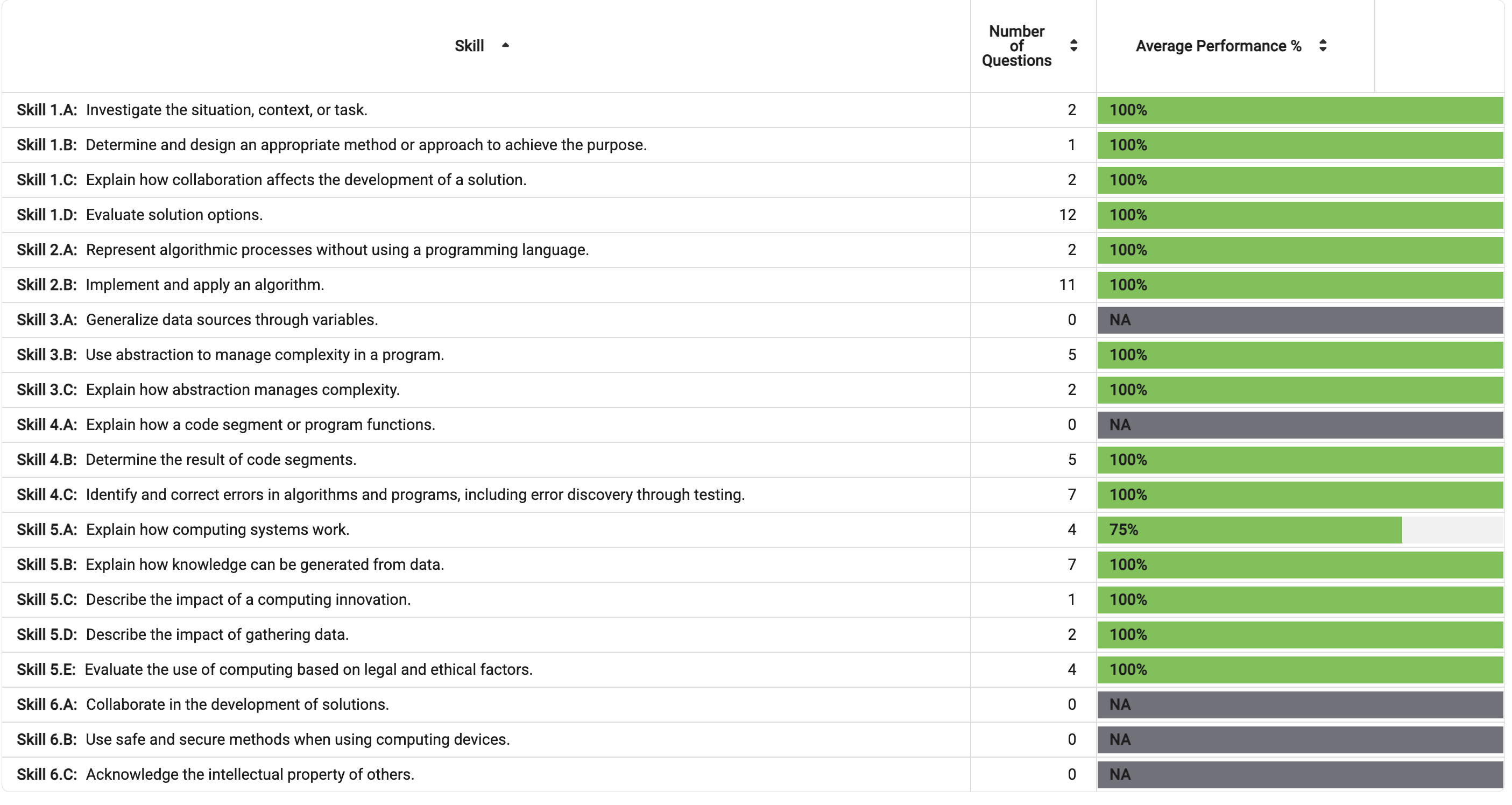
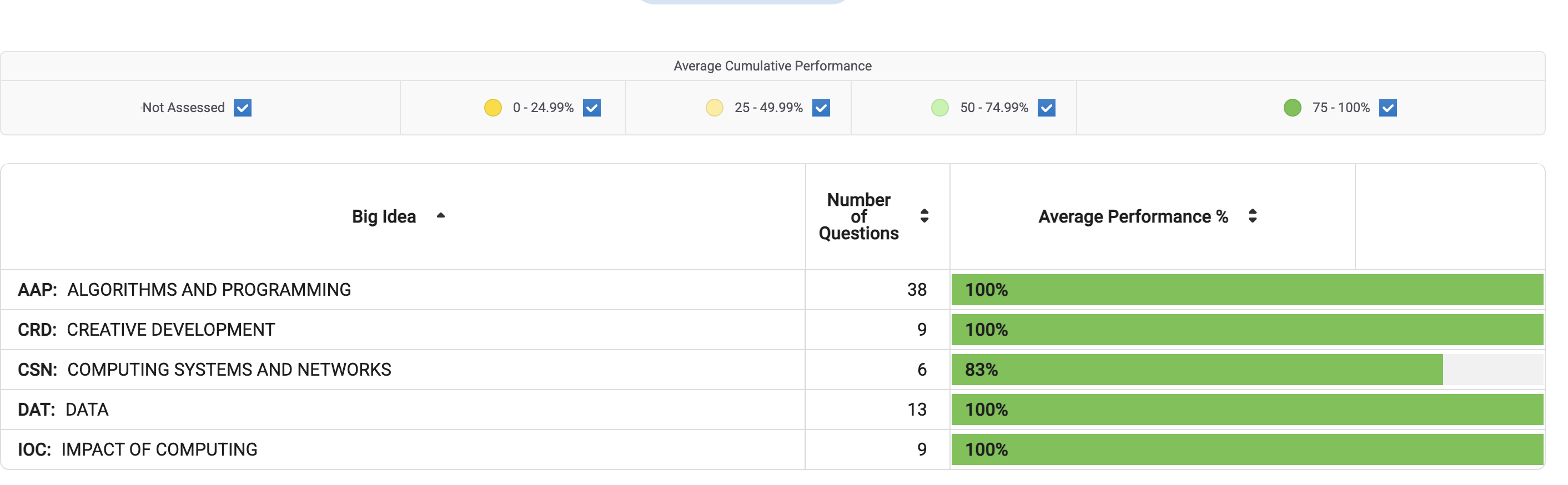
Some Analytics and Analysis of My Assessment
The Internet (Encryption)
What I learned:
This Practice Multiple Choice Exam was similar to the one we have done before, and that gave me experience and exposure to the type of questions. It required a lot of logic, and thinking how exactly each step in each question would change a variable. I had to use my mathematical thinking and problem-solving skills to solve many of the questions. I learned that many questions do not require much textbook knowledge but I have to be very keen on what each line of code means and what it does. So it is important to be observant and understand how each line of code plays out.
What I feel weak on:
By analyzing the question I got wrong, it was evident to me that I do not have a clear understanding of the Internet Protocol. I think that I can improve on and read about the different requirements and policies involved with sending informaiton over the interent, and I need to better understand what the latest protocols in place do to make sending information securely over the internet efficient.
Corrections:
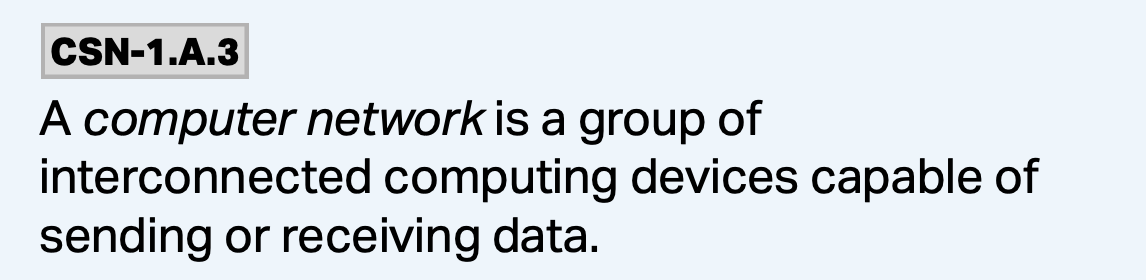
I got this question incorrect because I did not know the difference between IPv4 and IPv6. The incorrect answer option that I clicked on was actually not true, because regardless of the length of the address that does not impact or change the routing time of packets, because it is just a number used for location. However what IPv6 does introduce is more addresses for devices to connect to and this allows for more devices on a certain network, than IPv4 did, making it more updated and useful due to hosting more devices.
Some Interesting Questions:
Binary
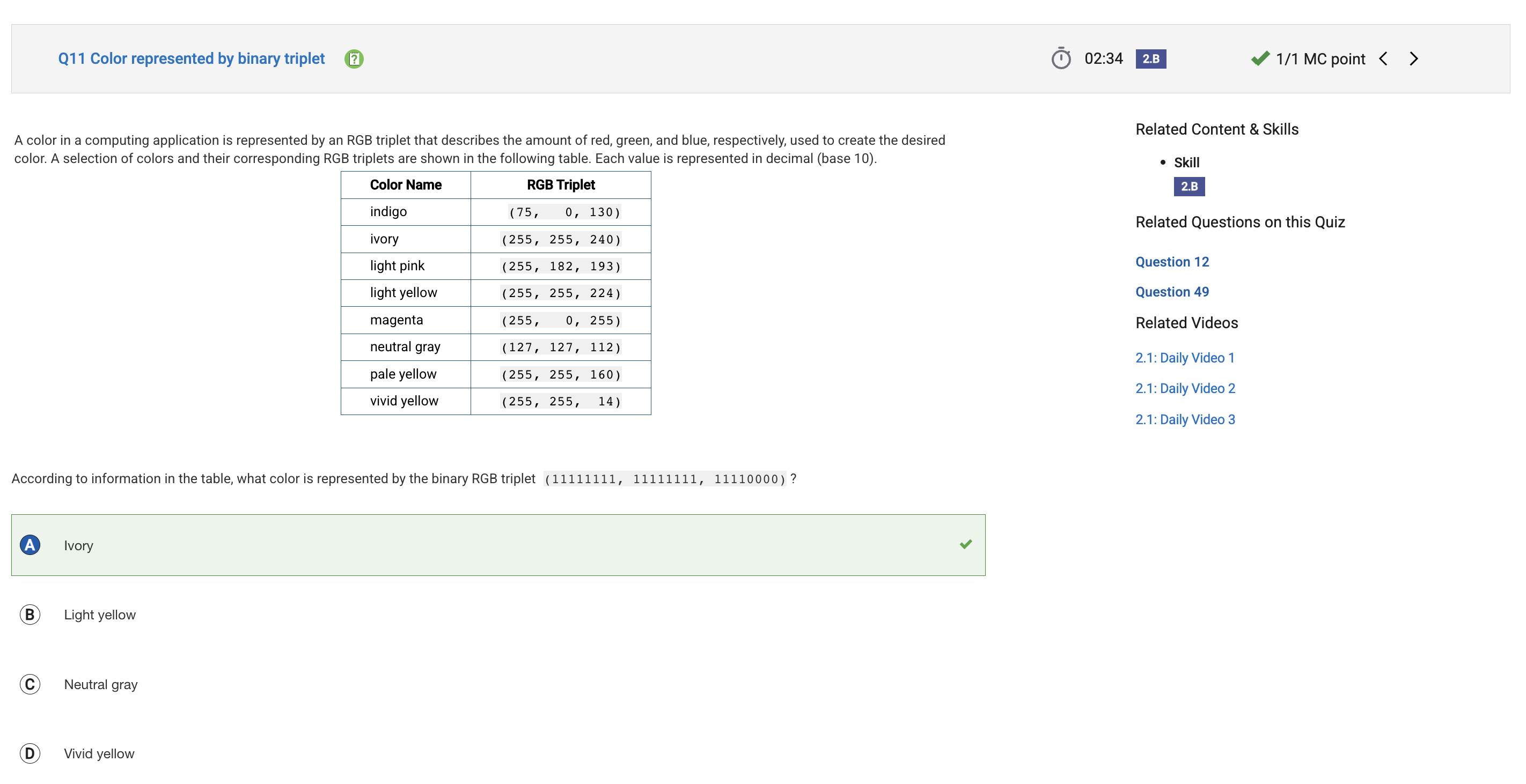
This is an interesting problem because I had to convert the binary(base 2) number to base 10 in order to find the correct color combination that matches up. I realized that it would be vey tedious if I converted each number in the binary to base 10, because multiple answer choices have the same R value for RGB, so I foun that for the B value, which is last each answer choice has a distinct number, so I just converted the last binary number, with the first digit having a value of 1, 2nd digit having a value of 2, and so on with a multiplier of 2 from right to left, and got the number 16+32+64+128 = 240, corresponding with the B value for ivory.
Runtime
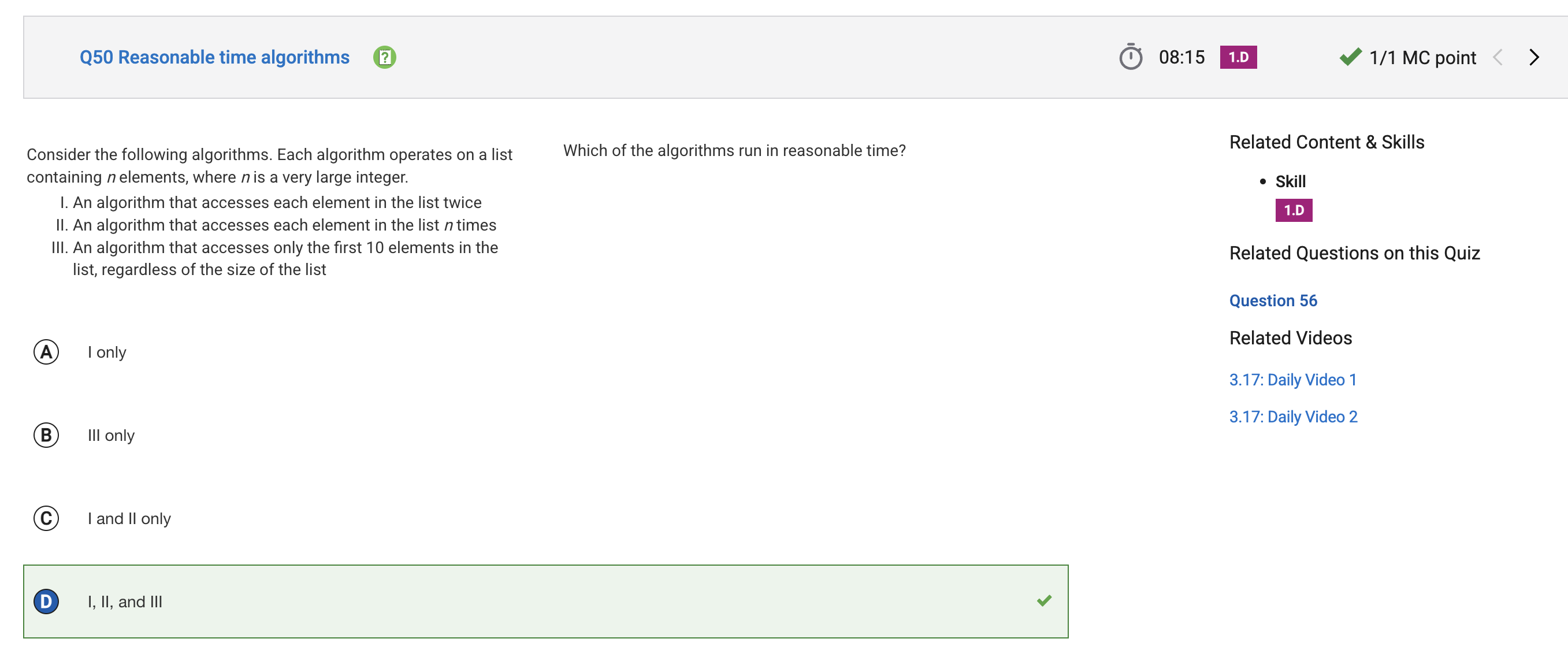
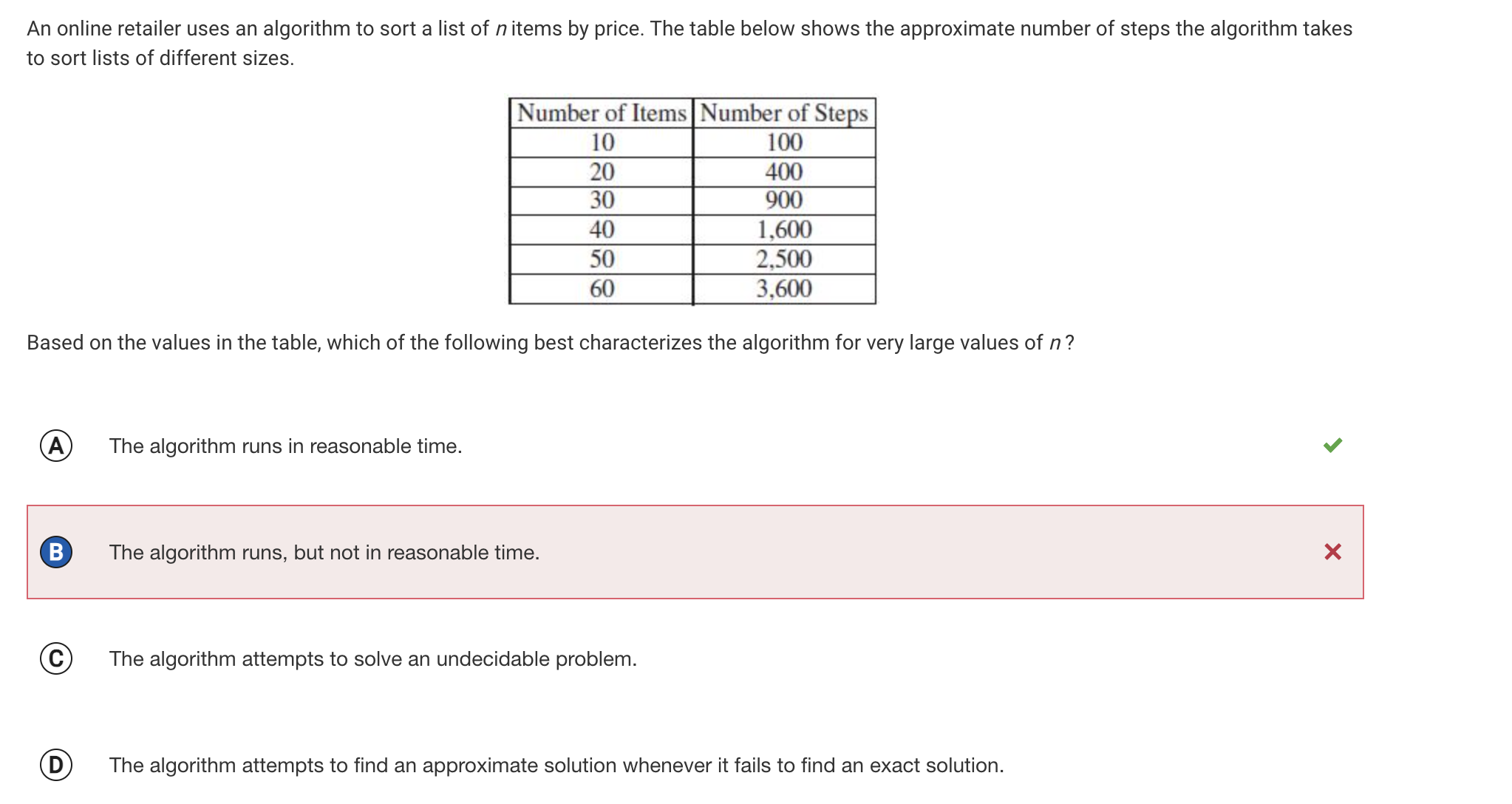
When I first attempted a similar time complexity/runtime type of question on the first MCQ we completed this year, I was stumped and assumed that out of the options the algorithm with the longest runtime would probably not be reasonable, but I got this type of problem wrong last time and learned that any algorithm with n elements that can be represented as a polynomial runs in reasonable time. Looking at the answer options initally it looked like algorithm 2 would not be reasonable, but it can be represented as n^2, so that algorithm, and all algorithms are reasonable.
Redundant Routing
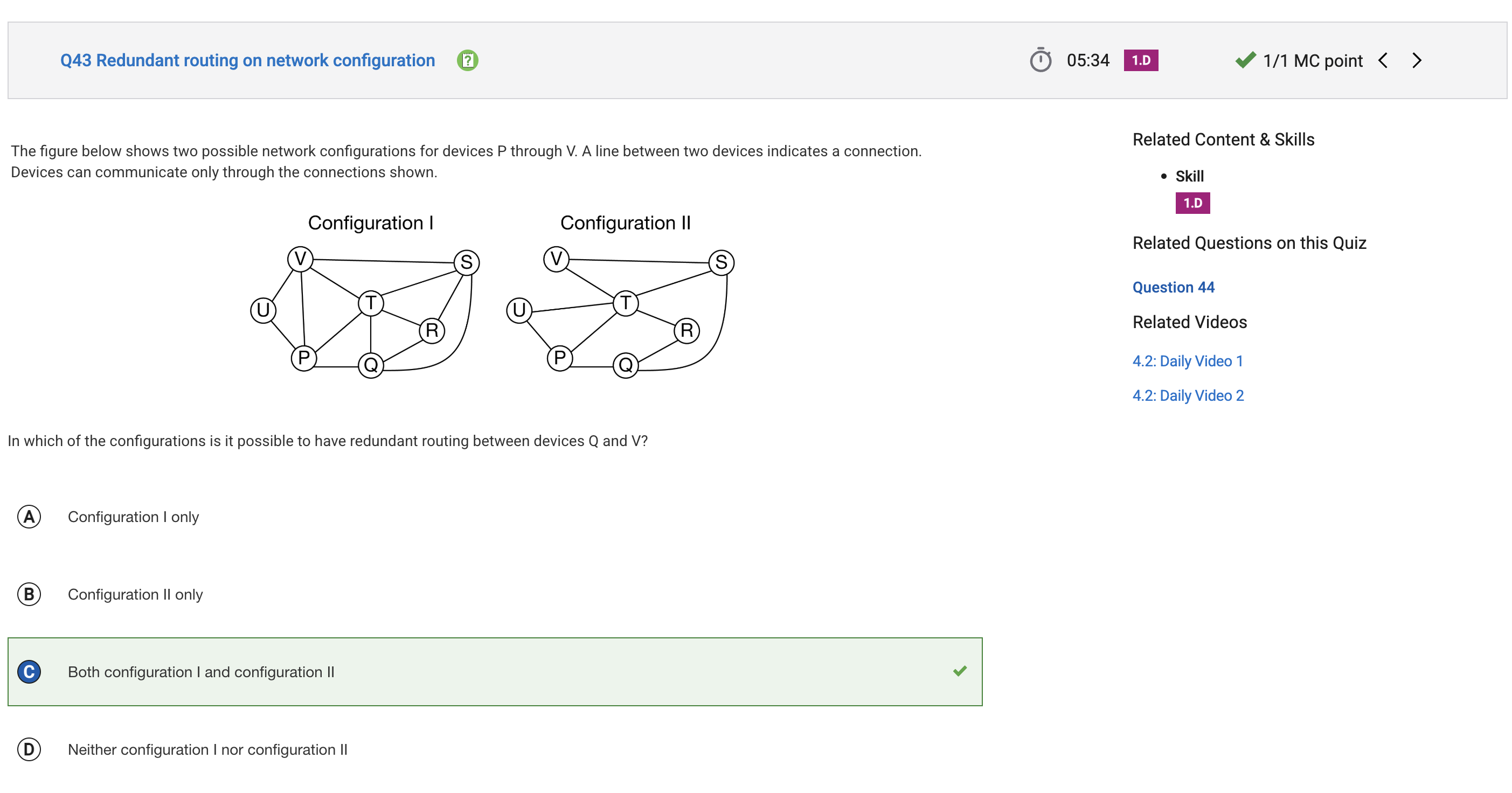
This question really surprised me because I’ve never seen such a question, and didn’t really understand it. But as I looked at it, I made use of the different clues the question gave me, and my knowledge, to undertand that redundancyw ould be something with multiple paths or options, and this inference and used of logical reasoning easily helped me get the answer to the question, because both configurations have more than 1 possible path for connection between the given letters.
IP Address
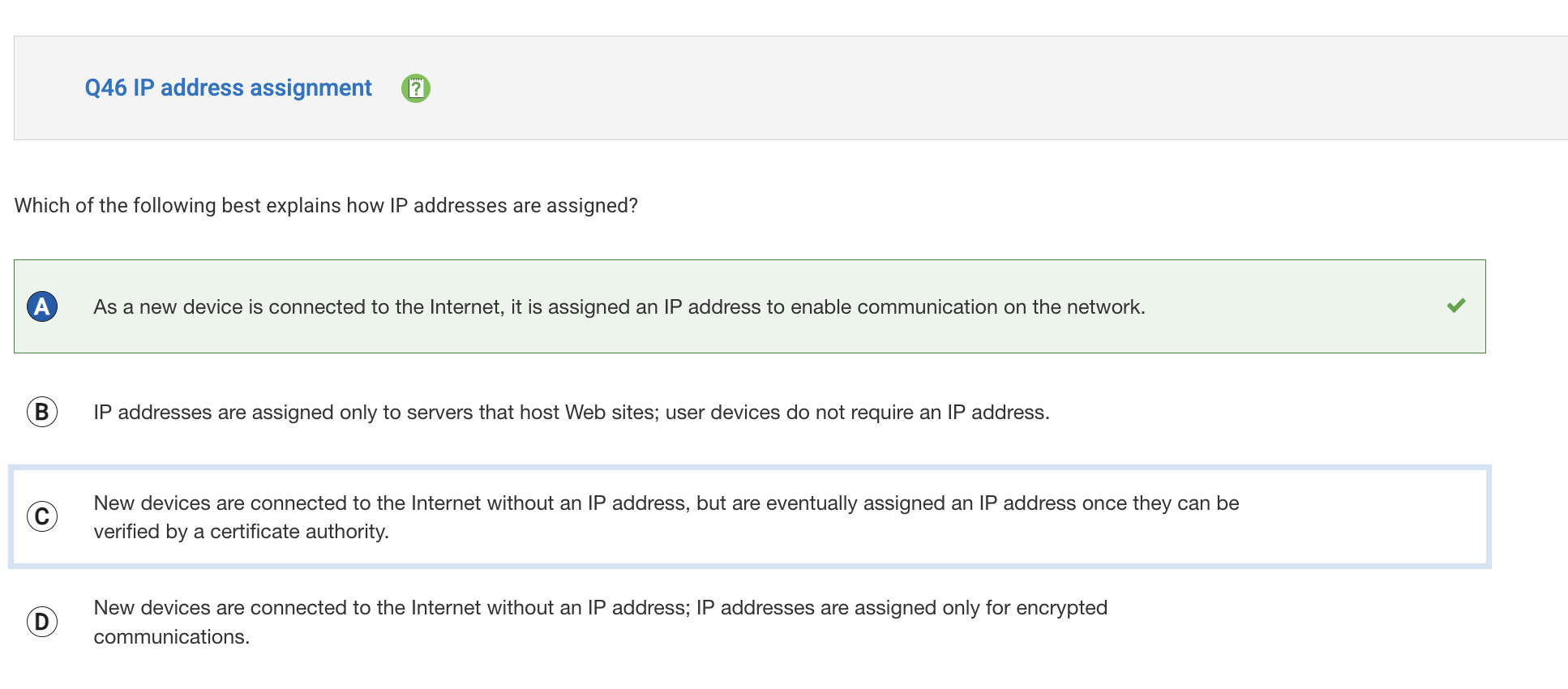
This question wasn’t as interesting or thought-provoking as the others, but it shows that I learned a lot during the 2nd trimester about the internet, and I understand how IP addresses work, even though I get a more challenginge one wrong above. Each device connected to a network is assigned an IP address, and simialr to a real address this is how information can be sent to and from that device.
Overall Plan for Improvement
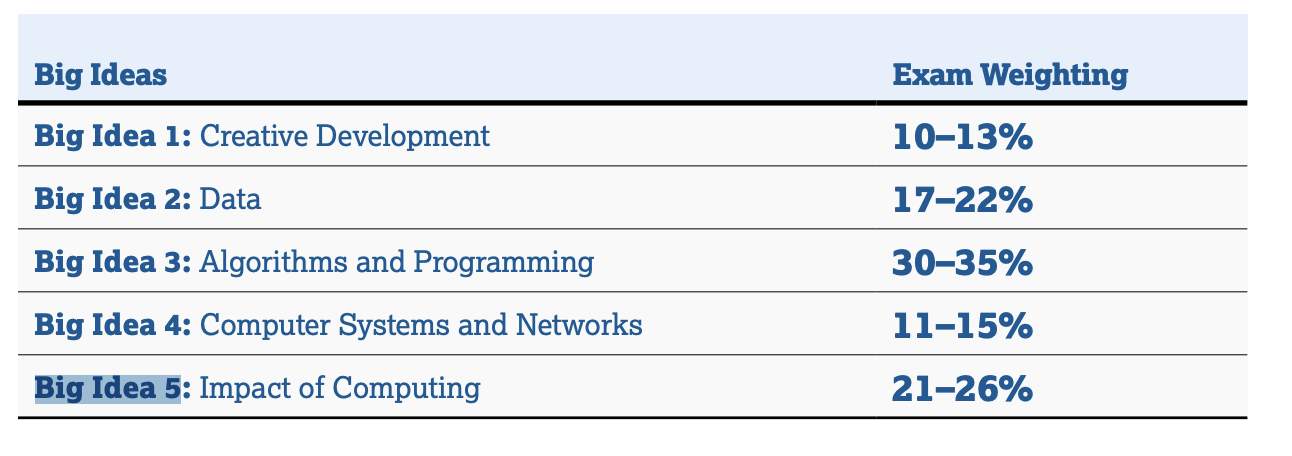
I plan on working hard to address the necessary topics through team teaches in Big Idea 5, as well as continuing to do practice problems containing logic problems and content.